General Overview
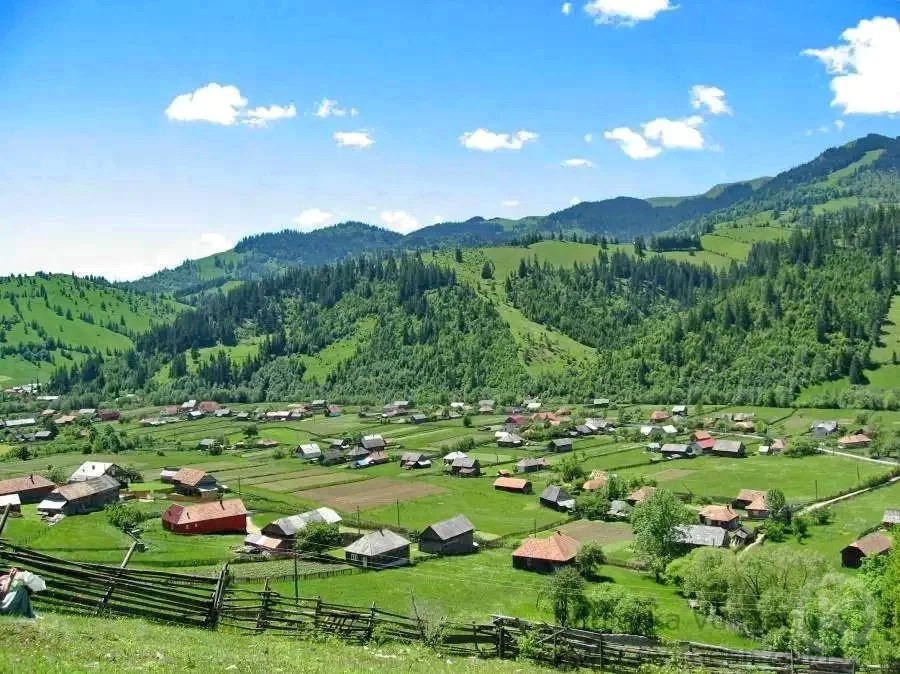
Lunca de Jos is a picturesque mountain settlement located in the eastern part of Harghita County, in the Ghimeș Valley, within the spectacular landscape of the Eastern Carpathians in Transylvania, Romania. The commune lies along the Trotuș River, between the Ciuc Mountains and the Tarcău Mountains, near historic mountain passes that once connected Transylvania with Moldova.
The locality is situated approximately 39 km from Miercurea Ciuc, the county capital of Harghita, and about 98 km from Odorheiu Secuiesc, according to typical road routes calculated using navigation systems such as Google Maps or Waze.
Lunca de Jos borders the neighboring settlements of Lunca de Sus, Ghimeș, as well as Dămuc and Făget. The commune stretches along several mountain stream valleys, including Boros, Recea, Întunecoasa, Căpelei, and Antaloc.
The average altitude of the area ranges between 700 and 800 meters above sea level, with pleasant mountain summers averaging 18–24 °C, while winter temperatures frequently range between −5 and −12 °C.
Natural Attractions
The Ghimeș Depression
The Ghimeș Depression is one of the most scenic mountain regions in eastern Transylvania, characterized by rolling green hills, alpine meadows, dense coniferous forests, and numerous small valleys.
The region is ideal for:
mountain hiking
cycling tours
nature photography
peaceful outdoor walks
The Ciuc Mountains
Close to Lunca de Jos rise the Ciuc Mountains, offering a variety of hiking routes and panoramic viewpoints over the Ghimeș Valley.
Key characteristics of the area:
extensive spruce and fir forests
alpine pastures
scenic ridge trails with impressive mountain views
The mountains are perfect for day trips and nature exploration.
The Trotuș Valley
The Trotuș River Valley runs through the entire Ghimeș region, shaping a picturesque natural landscape.
The valley is suitable for:
fishing
cycling routes
nature walks
exploring traditional mountain villages
Cultural and Ethnographic Heritage
The Ghimeș Csángó Culture
Lunca de Jos is one of the important centers of the Ghimeș Csángó culture, where traditional customs and rural lifestyles are still preserved today.
Distinctive elements of local culture include:
traditional folk costumes
folk music
traditional dances
rural agricultural traditions
The entire region can be considered a vast open-air ethnographic museum, where traditions remain part of everyday life.
Traditional Crafts
The area is well known for its rich traditional craftsmanship, passed down from generation to generation.
Important crafts includ…